
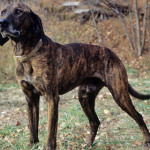
 From the smallest Chihuahua to the largest Presa Canaria, any dog can be dangerous. Size and breed are not the most important factors, although certainly the larger dog is strong enough to do the most damage.Most dog safety pamphlets and other sources of advice tend to spotlight certain breeds as inherently dangerous… most notoriously, the Pit Bull. Many communities have banned them. Some insurance companies have refused to write policies for home owners who harbor any of the dogs on their list of dangerous dog breeds, including “Pits,” Rottweilers, German Shepherds, and even black Labrador Retrievers in some cases!
But are breed bans the answer? No. It hasn’t worked yet, and that’s because the underlying problem is not addressed by banning specific breeds labeled as dangerous. It’s far more useful to consider lifestyle clues.
Is the dog tied or chained up all the time? Do the owners neglect to spend time with him? Or take him for walks? Have you observed the dog frequently being hit or yelled at? Does he have shelter from weather extremes? Are his food and water bowls always empty? Does he bark incessantly out of boredom? Or worse, has he stopped barking?
Poor living conditions are hard on humans and can lead to bad attitudes that make people grouchy. Similarly, harsh  living conditions can create dogs with bad attitudes as well. This alone can lead to the misconception that there are specifically dangerous dog breeds. People who understand that dogs have feelings, too, are immediately better equipped to provide a happier life for the dog. And happy dogs are safer to be around.
Often overlooked is the “baby factor.” While small dogs are usually not included on any lists of dangerous dog breeds, and they are far less apt to be left to languish in back yards, what goes on behind closed doors inside the home can lead to creating another kind of dangerous dog – the snarling biter.
Because they are small… and oh, so cute… the tendency is to baby them. They may be carried around all the time or held on someone’s lap, with every need constantly attended to… just like a little baby.
This prevents the dog from “growing up” and produces a spoiled brat that will do anything to preserve his special place as dictator in the home. Visitors who want to pet his majesty’s gorgeous head will be viewed as a threat and attacked accordingly.
While they probably wouldn’t kill an adult, their bites can be dangerous to one’s health and well-being.
Because you may not know a dog’s history or current living conditions, the usual precautions still apply:
1. Never approach a dog you don’t know… whether it’s with its owner, tied up, or running loose. 
2. Avoid eye contact, as some dogs may feel threatened and will defend themselves.
3. Do not raise your voice; never shout at the dog or scream.
4. Never turn and run away if the dog is loose. It’s an invitation to chase.
5. Do not disturb a dog that is sleeping, eating or chewing on a bone or toy.
6. Never, ever, tease a dog or poke things at him.
7. Never disturb a dog with puppies.
Just remember that a dog on a chain is no guarantee that it’s safe. In fact, constant tethering and isolation often cause a dog to become neurotic or excessively territorial, and thus, if anything happens, it will be labeled as a dangerous dog breed. Children have been mauled, and killed, because they attempted to play with the nice doggie tied up next door.
Dogs are pack animals, and being forced into solitary confinement may be the most devastating thing a human can do to them.
If you see a dog being neglected or abused, please report it. The life you save someday may be your own, or a child’s, or even a gentle but naive pet in the area. Most dogs will defend their territories, but the so-called dangerous dog breeds are neurotic about it due to thoughtless or misguided treatment.
Article by Dr. R.J. Peters, a retired health professional who established a pet rescue shelter in 2002. Learn why pets need insurance, too, at Every Pet Matters.
Thanks to Dr Peters for his informative and authoritative article.
Prevent dog bites – prevent your dog from biting behavior that could lead to a tragedy.
📅 Last updated:




Although most of the advice on dog problem training you will be offered is likey to be given with all the best intentions, some people still believe that the most effective training is to punish the pet when the desired action is not met.
What happens when a stray finds you and your dog and attacks your dog, then what? Your precautions aren’t going to help then. Have you ever heard another dogs cries as he is being attacked by a pittbull! It’s sickening and horrific! The dogs should be banned!
In response to H I have to sympathise to anyone who is controlling their dog only for a stray running loose to come and attack it but it is the person who owns the dog that is running around who is responsible. such people should not be allowed to keep animals as it is giving all dogs of those breeds bad reputations. I know a few people with pitbulls and at least one of them i have seen myself that she wouldn’t attack another dog. All she wants to do is play with them and that is when we were on the other side of the park from her. The way a dog behaves is largely dictated by how its owner treats it. That is true of all breeds