
(Site may include affiliate links, and we may earn a commission from qualifying purchases.)
 * There are so many brands that offer dog food today. You need only to stroll down a grocery store and you will find bags and bags of canine chow in colorful packaging that will try to entice you with discounts and supposedly yummy flavors your dog will enjoy. The problem is that not all of these food are really good for your pet’s health. In fact, most commercial pet food brands will actually do more harm to your dog’s health than you can imagine.

Wellness Dog Food is NOT one of the commercial foods being discussed here!
Ingredients in Commercial Dog Food
Many of the ingredients that are found in these pet food products are processed and loaded with chemicals to make them last longer, look more appealing, and taste better to the canine palate. It doesn’t take a genius to realize that the more of these preservatives pumped into your dog’s system, the more likely he is susceptible to sickness and diseases. Yes, the commercial dog kibble may cost you a few dollars less in the grocery check-out counter, but you will end up paying more in the long run with medical bills and expenses. It is infinitely better to invest in good dog food early on and enjoy a good looking and happy dog, than scrimp on their food and watch them live a poor quality of life.
Best Dog Food – Reviews

If you’re asking – what’s the best type of dog food you can give your pet? The answer is the most natural kind. Before we domesticated our beloved dogs, they lived in the wild. They thrived on organic raw meat, fruits and vegetables. Are you worried about your dog being infected with bacteria and getting sick? You’ll be pleased to learn that a dog’s intestinal tract is shorter and more acidic than humans which means that bacteria found in raw food will not survive in their systems for very long.
Of course this is not to say that ALL organic food that humans can eat are good for your dog. There are some ingredients that are very harmful to our canine friends. Some fruit and nuts such as macadamia and walnuts, fruit pits/cores, raisins and grapes, and the spice nutmeg are just a few examples of toxic food for dogs.
Natural Diet for Dogs

Meat is good for dogs. Many experts recommend the BARF diet which is the Bones And Raw Food or Biologically Appropriate Raw Food diet. Now, some concerned pet owners are not very comfortable serving their dogs uncooked meat and if this is you, it’s OK. You can cook them if you prefer, although there are more nutrients in raw food that your dog will benefit from. If you do cook the meat, make sure you remove the bones first. Cooked bones tend to splinter and be a choking hazard to the dog. You can either cook the bones, crush it to powder and sprinkle it over your dog’s food, or remove them and feed it to your dog raw separately. Either way, bones are a good source of calcium that is good for dogs.
Best Dog Food Brands
 While it is ideal that you prepare this type of diet for your dogs, it is not always convenient to our busy schedules. The good news is that there are some great healthy pet food brands that offer organic and natural food that are packed with nutrients that your dog needs. You can find out which is the best dog food brands by looking at dog food reviews and comparisons. You will find some dog food ratings and reviews in other parts of this site, that analyse the ingredients in various foods to help you make an informed decision on what brand or brands you should try. My recommendations on the best dog food in the market today if you are wanting a convenience type food that is actually pretty healthy are:
Healthy Dog Food Brands
Acana dog food
Blue Buffalo (also often simply called Blue dog food)
Honest Kitchen
Innova
Life’s Abundance
Merrick dog food
Natural Balance dog food
Orijen dog food
Sojos
Solid Gold
Taste of the Wild
Wellness dog food
Wysong
Ziwipeak
This list is in not in any particular order of preference (in fact, I have simply listed the brands in alphabetical order).
10 Best Pet Food Brands for Dogs
 Many times I have been asked to list my 10 best dog food brands, and I have attempted to do that in my order of preference below. But really, dog food advice is very subjective. There are several excellent dog food brands, and some may suit your dog better than others. Or he simply may like the taste of one over another!
My best advice is to steer clear of the commercial, supermarket-type brands (and also many of the so-called premium brands probably offered in your veterinarian’s surgery – vets are not trained (or very poorly trained) in animal nutrition (believe it or not), and get all (or most) of their information from the commercial pet food manufacturers which peddle their products in veterinary surgeries – you know the ones I’m talking about. Do your research – I recommend you start with the above list – and come to an informed conclusion on what you should feed your beloved dog. He deserves it!

Feel free to explore the links on this page for dog food reviews and dog food ratings, as well as information specific to each of the recommended brands in the best dog food list above.
Here is a quick rundown on each of the top dog food brands in the list, and roughly in my own order of preference:
My No. 1 Dog Food:
Wysong: <= click to look or buy online
 The correct and healthy archetypal diet for pets is foods they are genetically adapted to. For carnivores, that would predominantly consist of raw prey. The logic and evidence for this is unassailable and Wysong has been teaching it for the past thirty years.
For truly raw food, two options remain for consumers – feed raw foods from the grocery or feed Wysong True Non-Thermal (TNT™) raw cat and dog foods. The Wysong TNT™ process can only be done in relatively small batches. It requires extremely expensive equipment and is very labor intensive. The process requires days to complete because the product is never raised above approximate body temperature.
Wysong Archetype™, Dream Treats ™, UnCanny ™, Origins™ and other Wysong raw animal products are produced at the Wysong facilities with this process.
The truth is simple. Humans are the only creatures on the planet that cook food. Does nature really have it all wrong? Not likely. Pets need their raw archetypal diet and a variety of honest foods. Some grains and starch in the diet here and there is perfectly fine, but just not meal after meal. Cooked pet foods are fine here and there too, but not day after day, or exclusively. Pet owners deserve honest products designed and made by competent pet product producers (not marketers) that truly embrace health-first design and offer true non-thermal processing options.
My No. 2 Dog Food:
Sojos: <= click to look or buy online

With Sojos raw dog food, you can be assured that your dog is eating fresh, wholesome all natural ingredients packed with essential nutrients. Sojos natural dog food forumulations are primarily gluten-free options with fruits and veggies that are gently air-dried and USDA raw meat which is freeze-dried right in Sojos own facility, keeping nutrients and enzymes intact. Sojos offers several varieties of natural raw dog food. Your dog’s health and well-being will be maximised with these recipes.
All Sojos foods are wheat and corn-free, contain no GMO‘s or artificial flavors. Sojos Original Dog Food Mix is a mix to which you add your own protein sources if you prefer to do that. It contains rolled oats, rye flakes, and barley flakes, along with pecans, tricalcium phosphate, dried kelp, parsley leaf, carob powder, basil, dried alfalfa, sunflower oil, and vitamin D3. All of the other Sojos foods are completely grain free, including the Grain Free Mix, to which you also add your own protein sources.
The remaining Sojos formulations are complete meals in themselves, containing dried protein and vegetable sources, and include Sojos Wild Boar, Wild Salmon and Wild Venison varieties, all with 38% to 43% crude protein content, or if your dog requires a lower protein content (e.g. if your dog suffers from any skeletal problem), then the Sojos Complete Lamb, Beef or Turkey Dog Food formulations contain 22% to 26% crude protein.
All are delicious, and dogs love them!
My No. 3 Dog Food:
Life’s Abundance: <= click to look or buy online
 Fresher food is more nutrient-rich. Many leading brands stockpile tons of food for months on end. Life’s Abundance makes healthy dog food weekly in small-batches. It’s only 4-to-6 weeks old when it’s delivered. It is only available online or from personal distributors who order online, so you can be confident that the food has not been sitting on a store shelf for longer periods! When you buy Life’s Abundance dog food, your dog will benefit from these strict inventory controls and product safety considerations that are second-to-none. Put your dog on the path to wellness. Provide them with a recipe for a long and happy life!
Life’s Abundance natural dog food recipes contain only the finest ingredients, like …
- High-quality protein from chicken meal, for strong muscles
- A selection of nutritious vegetables
- A proprietary blend of vitamins and minerals
- An antioxidant system including Vitamins C and E
- Prebiotic fiber, Probiotics, and Dietary fiber, to help maintain a healthy digestive tract
- Omega-3 fatty acids, for healthy skin and a shiny coat
- Calcium and phosphorus, for healthy teeth and strong bones
To be the best dry dog food, Life’s Abundance premium kibble does not contain …
- Any artificial flavors or colors
- Any corn, wheat or corn/wheat glutens
My No. 4 Dog Food:
Ziwipeak: <= click to look or buy online
 Natural balanced real-meat diet prepared with care in New Zealand. The peak health of dogs depends on the sustenance they get from real meat. ZiwiPeak products are formulated with the same balance of meat ingredients that dogs would find by hunting in the wild. It’s the diet that nature intended. Energize your pets with the nutritional value of a raw meat diet, with the convenience of air-dried jerky style portions.
Ziwipeak’s unique, gentle air-drying process respects the nutritional value of 90% meat, organs, fish and green-lipped mussels. It minimises damage to the proteins, vitamins and sensitive nutrients and enzymes in the all-natural ingredients, so your dog gets nearly all the benefits of a raw-meat diet. The other 10% consists of carbohydrates from natural sources, such as green tripe, chicory, kelp and parsley, plus essential vitamins and minerals for a balanced diet. The food’s then further protected in a re-sealable airtight package.
Beginning in their natural, wild habitats, cats and dogs have digestion systems evolved to thrive on raw meat and organs. And ZiwiPeak is just as nature intended. It has 90% real raw meat, organs and fish in the Ziwipeak dry food. The remaining 10% is pure goodness, in the form of carbohydrates from natural sources, such as green tripe, chicory, parsley and kelp, plus essential vitamins and minerals for a balanced diet, like chondroitin and glucosamine.
My No. 5 Dog Food:
Blue Buffalo Dog Food: <= click to look or buy online
BLUE recipes always start with high-quality proteins such as–deboned chicken, lamb, or fish.
 One of the most important ways BLUE distinguishes itself from other pet food brands is with the addition of our exclusive LifeSource Bits.
When BLUE pet food was being developed, the Blue Buffalo Co. Ltd found that many of the highest-priced pet foods cook their added vitamins and minerals right along with the rest of their ingredients. Blue Buffalo was of the view that this process can degrade the potency of important antioxidants like Vitamin C up to 75%. LifeSource Bits are “cold-formed” to preserve their potency so that your dog or cat enjoys the full benefit of all vitamins, minerals and antioxidants.
LifeSource Bits contain a precise blend of vitamins, minerals and antioxidants selected by holistic veterinarians and animal nutritionists. These include ingredients help support your dog’s (or cat’s) immune system, support their specific life stage requirements and help maintain a healthy oxidative balance.
My No. 6 Dog Food:
Honest Kitchen Dog Food: <= click to look or buy online
 The Honest Kitchen’s goal is to ensure your dog (and cat) is getting the absolute best pet food possible. Honest Kitchen dog food incorporates only quality ingredients, using a careful process of dehydration and a commitment to product quality. Honest Kitchen is committed to making its community and planet a better place. All this wrapped up in every Honest Kitchen box!
They take out the water, you put it back! Dehydration is an age-old method of naturally preserving ingredients by simply removing moisture, without the need for chemicals of any kind. Human beings actually taste every ingredient that goes into all Honest Kitchen formulations, as part of its product development process.
My No. 7 Dog Food:
Acana Pet Food: <= click to look or buy online
 ACANA represents a new class of foods that mirrors the high and various inclusions of fresh, whole meats that dogs and cats are naturally evolved to eat, while excluding inappropriate ingredients.
With three unique product lines formulated to our Biologically Appropriate™* standards, ACANA is guaranteed to meet the diverse nutritional needs of today’s dogs and cats. Made from Canada’s best and freshest ingredients in our own award-winning kitchens, ACANA‘s authentic foods keep your pet healthy, happy and strong. Read our ingredients and we think you’ll agree.
*What does Biologically Appropriate™ mean?
– 5 factors make up this definition:
1. Meat Concentrated:
All dogs carry the same evolutionary origin and DNA as the gray wolf. Just like their wild cousins, our companion dogs and cats are carnivores. They are equipped with sharp teeth and a body evolved to effectively metabolize proteins and fats from meats, not plants.
2. Diverse Meat Ingredients:
Think about the dramatic variation of the natural diet: a nest of eggs or rabbit today, a duck or goose tomorrow, fresh fish the next. This variety of fresh meats and fish provides the diversity of proteins and fats essential to the peak health of dogs (and cats). From cage-free poultry and eggs, to ranch-raised red meats and wild-caught fish, ACANA foods feature a diversity of meats to mirror the natural diet and promote the peak health of dogs (and cats).
 3. Protein Rich and Carbohydrate Limited:
Dogs and cats don’t need carbohydrates. Their natural diet contains few, if any. Your dogs and cats are carnivores. Our pets have evolved to metabolize animal proteins and fats as energy sources. ACANA limits carbohydrates to about half that of conventional foods, and features steel-cut oats as a low glycemic single source of grain.
4. Whole Fruits and Vegetables:
Give your pet important vitamins and protective nutrients instead of high glycemic grains like corn and rice. Fruits and vegetables supply important vitamins and protector nutrients in natural, bio-available form. They also provide the limited amount of carbohydrates needed to form a kibble.
5. Fresh, Regional, Ingredients:
Cage-free poultry, ranch-raised meats, wild-caught fish and sun-ripened fruits and vegetables need to be passed fit for human consumption before arriving fresh each day loaded with goodness. What many pet foods call fresh are actually pet-grade meats. They are frozen into 25kg blocks – to make them easier to transport and store – and often frozen and thawed a number of times. It’s usually the case that they are many months old before becoming food for pets.
My No. 8 Dog Food:
Merrick: <= click to look or buy online
 Merrick’s bold assertion is that they don’t make pet food – what they make is the best food ever, for the best pet ever (yours, of course!)
Merrick’s real, wholesome recipes use USDA-inspected deboned meat and fresh produce for industry-leading levels of protein, glucosamine and chondroitin. Merrick never imports ingredients from China. It handcrafts its food in its Hereford, Texas kitchen. Merrick sources ingredients from farmers they know and trust. Because your best deserves their best.
Merrick’s award-winning recipes provide leading levels of quality protein, along with farm-fresh fruits and vegetables like sweet potatoes, blueberries, peas and more. Industry-leading levels of Omega 6 and Omega 3 fatty acids aid in a healthy skin and coat for dogs, and powerful levels of glucosamine and chondroitin foster healthy hips and joints.
No Merrick product contains any corn, wheat, soy or gluten ingredients.
My No. 9 Dog Food:
Orijen Pet Food: <= click to look or buy online
 Protein-rich, carbohydrate-limited and grain-free, ORIJEN features the highest fresh meat inclusions of any dry dog or cat food, at the same time excluding many conventional pet food ingredients — such as inappropriate high-glycemic cereal grains and vegetable proteins that simply are not present in the natural diet.
To mirror the natural diet, ORIJEN also features a diversity of meats including fresh, free-run chicken and turkey, fresh whole eggs, fresh free-range red meats and fresh saltwater and freshwater fish — all in a Biologically Appropriate ratio of 80 percent meat, 20 percent fruits and vegetables, and zero grain (80.20.0).
By mirroring the foods that dogs and cats evolved to eat, Biologically Appropriate ORIJEN nourishes as Mother Nature intended, resulting in the peak health and happiness of your cherished dog or cat as well as your peace of mind.
My No. 10 Dog Food:
Natural Balance Dog Food: <= click to look or buy online
 Natural Balance is said to be Truly The Food For A Lifetime.®
Dick Van Patten’s Natural Balance Pet Foods® is based in Burbank, California. When Dick founded the company in 1989 he intended to develop the best pet food on the market. Dick wanted a healthy pet food based on sound scientific principles and truth, not marketing hype. And it seems that he did it! No matter which of the Natural Balance pet foods you choose, whether the dry or canned varieties; grain-free or limited ingredient pet food; or vegetarian formulas, you can be assured that it truly can be The Food For a Lifetime.®
Every production run of Natural Balance pet food is tested before distribution so that you can “Buy With Confidence”.
Natural Balance® Pet Food encompasses several formulas, all featuring high-quality meats and unique proteins, complex carbohydrates and nourishing fruits and vegetables. For over a decade, Natural Balance L.I.D. Limited Ingredient Diets® with limited protein and carbohydrate sources were one of the first of their kind on the market and have paved the way in the limited ingredient diets category.
Not in my Personal Top 10 Dog Foods, but Here are Another 4 Pretty Good Foods:
Wellness Dog Food: <= click to look or buy online
 The history of Wellness® dates back almost 84 years, with the inception of Old Mother Hubbard®, oven-baked dog biscuits. One day a local sailor threw a biscuit to his dog that happily gobbled it up. The rest, as they say, is history. Upon its official establishment in 1926, Old Mother Hubbard began baking dog biscuits for distribution throughout the Northeast.
Fast forward to the 1990’s, when a dedicated team began working with a team of animal nutrition experts, veterinarians and scientists to develop a food that would revolutionize the pet food industry. The result was Wellness. Wellness recipes for Dogs were introduced in 1997.
From the first step to the last, every precaution is taken to ensure the Wellness produces a quality product that will enrich your pet’s life. This allows him to experience true health, happiness and vitality. Wellness employs rigid manufacturing procedures and protocols, enabling them to produce nutrient-dense food that is safe, wholesome and delicious. Wellness carefully handles ingredients in order to preserve the vitamins, minerals and other nutrients. The end result is a balanced formula. Wellness never uses artificial flavors, preservatives or other chemicals. Instead, Wellness selects a small number of pure, authentic ingredients that are brimming with the nutrients your pet needs to thrive.
Innova Food for Dogs: <= click to look or buy online
 Dogs and cats are healthy and happy when they eat wholesome, natural foods: high-quality proteins like chicken and turkey, and farm-fresh fruits and vegetables like apples and carrots.
Applying this nutritional philosophy, Natura introduced Innova in 1993 as the first holistic, natural pet food. For more than two decades, Innova has been improving the lives of pets by using superior, farm-grown nutrition.
Expert animal nutritionists carefully select ingredients for Innova. Innova only uses nutritious and healthful ingredients.
- High-quality chicken, turkey, salmon or red meat is the FIRST ingredient
- Fresh fruits and vegetables like crisp, hand-picked apples and vibrant, whole carrots
- 100% whole grains, plus grain free options
- Vitamin E helps support the immune system, plus antioxidants from apples and blueberries
- Omega fatty acids help nourish a healthy, shiny coat
Solid Gold Dog Food: <= click to look or buy online
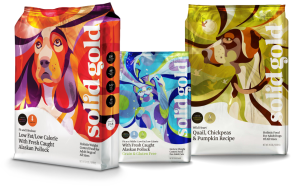 Solid Gold’s mission began in 1974 when Sissy Harrington McGill, a pioneering, animal-loving woman, decided her dogs deserved a nutritious, natural food that would keep them happy and healthy. Thus, Solid Gold’s flagship product, Hund-N-Flocken was born. Sissy believed everyone’s pets deserved the best as well. She built a strong following of pets and their owners, sample by sample. Now, over 40 years later, Solid Gold has a well-developed line of natural and holistic dry foods, canned foods, treats, and supplements for both dogs and cats.
Solid Gold states its mission as being to create the kind of nutrition that will change pets’ lives in mind, body, and spirit. That’s why, for over 40 years, Solid Gold has scoured the earth looking for simple, natural ingredients that unleash the very best in your pet, which they call their “inner gold”!
Powerful proteins. Vitamin-rich super foods. Balanced ingredients. That’s the Solid Gold commitment.
Taste of the Wild: <= click to look or buy online
 Years of domestication have turned your pets from fierce predator to best friends. Modern science, however, proves that your dog or cat still share the DNA of the wolf or wild cat. Taste of the Wild® Brand Dog and Cat food offers your pet a diet dictated by his genes. It provides your pet with the kind of natural, balanced diet that he could find “in the wild.”
Now you can satisfy your dog or cat’s instinctual cravings with Taste of the Wild foods. Made with real roasted meats and supplemented with fruits and vegetables, these grain-free formulas provide a superior taste sensation. They provide highly digestible energy and natural antioxidants to support a healthy immune system and overall health.